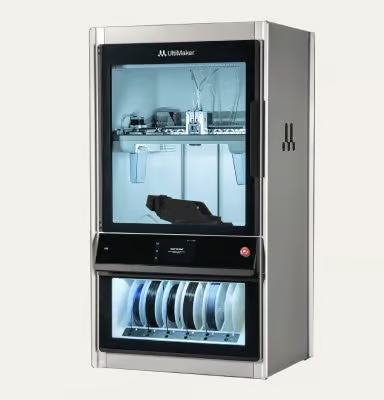
Engineering, Rapid Tooling
Multi-material 3D printing with FDM 3D printers – How do you combine soft and hard materials (TPU with PA 12 CF) in one component?

Jan
If you’re new to 3D printing, you’re probably discovering the variety of materials available. One of the most interesting groups of materials is composites, which includes carbon fiber, an extremely versatile material. But what can you actually do with 3D printed carbon fiber composites and when should you use them?
Carbon fibers were first used by Thomas Edison in the late 19th century as filaments in early light bulbs. In the late 1950s, Union Carbide Corporation first recognized the strength benefits that could be achieved through further processing techniques. Over the next 50 years, manufacturing techniques continued to improve, and today carbon fibers are ubiquitous in high-performance products from race cars to airplanes. With advances in composite materials and the benefits of 3D printing, carbon fibers are now accessible to more people and for more applications than ever before.
Traditional carbon fiber vs. composite blends
When you think of carbon fiber, the first thing that probably comes to mind is exotic race cars, sporting goods or aircraft parts – easily recognizable by the graphite black cross weave that is both incredibly strong and lightweight. The process of manufacturing components using the carbon fiber layup or weaving process produces incredible results, but can also be very costly and labor intensive due to the many steps required to produce a component. This is where carbon fiber composite blends come into play. With composite blends, the carbon fiber is shredded and mixed with a base resin or polymer. The result is a material that is easier to transform into parts (you can use techniques such as injection molding, machining and 3D printing). Another advantage of compositing carbon fibers is the ability to achieve additional properties by using different base polymers (nylon, for example, can impart some impact strength to reduce the brittleness of carbon fibers).
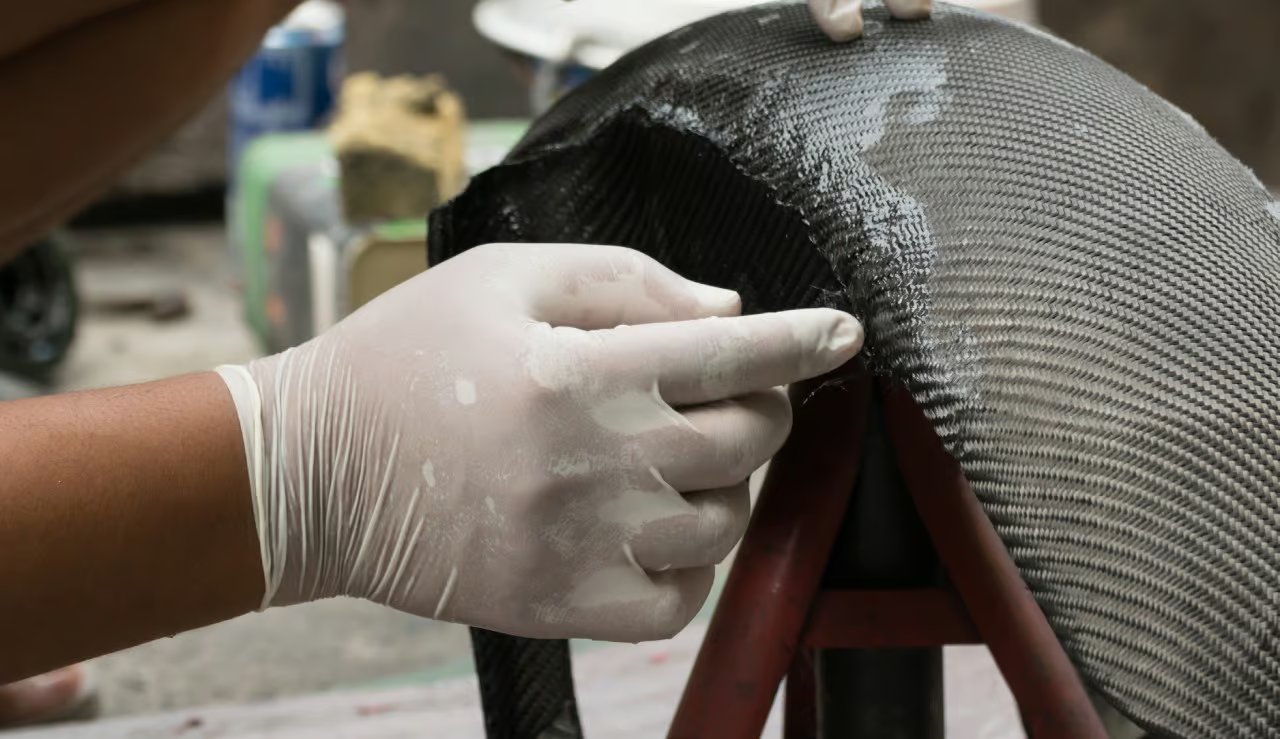
Manufacturing techniques for composite materials
While composites already offer some accessibility to carbon fiber by opening up the material to mass production techniques, 3D printing allows carbon fiber to be used for low-volume, low-effort parts. With 3D printing, you can easily produce a single tool used by a single user for a specific application. You can also go through an iterative process where this tool is continually improved as new knowledge or requirements come in. So a part, such as a bracket or fixture, that would seem crazy to make out of carbon fiber conventionally, becomes entirely plausible and possibly the most logical choice for that application through the use of 3D printing.
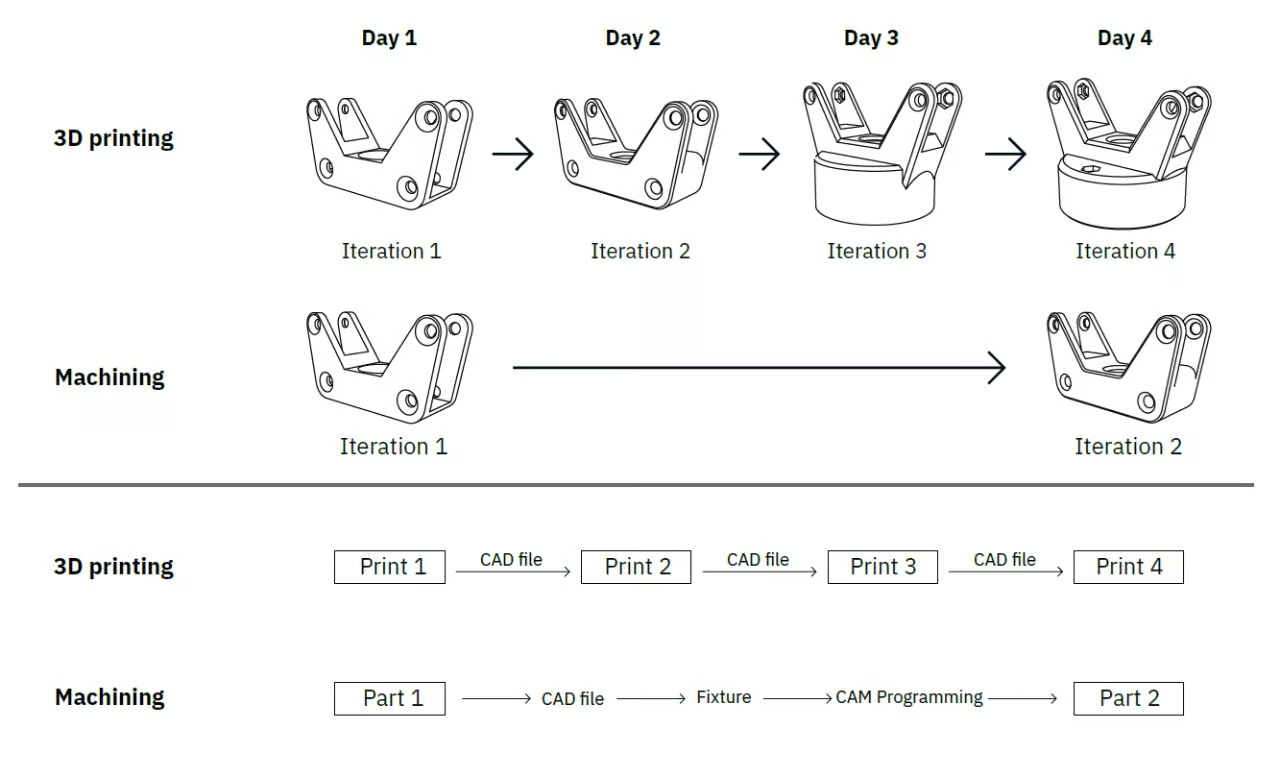
To understand why this is so, you need to know the basic advantages of 3D printing over other manufacturing processes. With an FDM 3D printer, all you need is a spool of material and a 3D design file. Start printing and in a few hours you will have the finished part. In contrast, with an injection molding process, the mold must be designed and produced in advance. Similarly, machining requires fixtures to be set up, a CAM program to be created, and the part may need to be machined multiple times by an operator throughout the machining process. In summary, 3D printing requires very little set-up or supervision during the manufacturing process, making it a fairly simple, automated process.
When does 3D printing make sense?
Before you dive in, buy a 3D printer and start replacing all your parts and processes, it’s important to understand when carbon fiber composite 3D printing makes sense. As with any technology, there are pros and cons to 3D printing, and if you want to use the process for a business application, you need to make sure your investment is worthwhile.
Time saving for design iterations
A major advantage of 3D printing, as already mentioned, is the ease of setup compared to injection molding and machining, which can lead to a huge time advantage. Being able to go straight from design to print job without having to make additional adjustments means that significantly less working time is required for individual parts. This time advantage is multiplied if you continue to develop the part to improve it through multiple iterations.
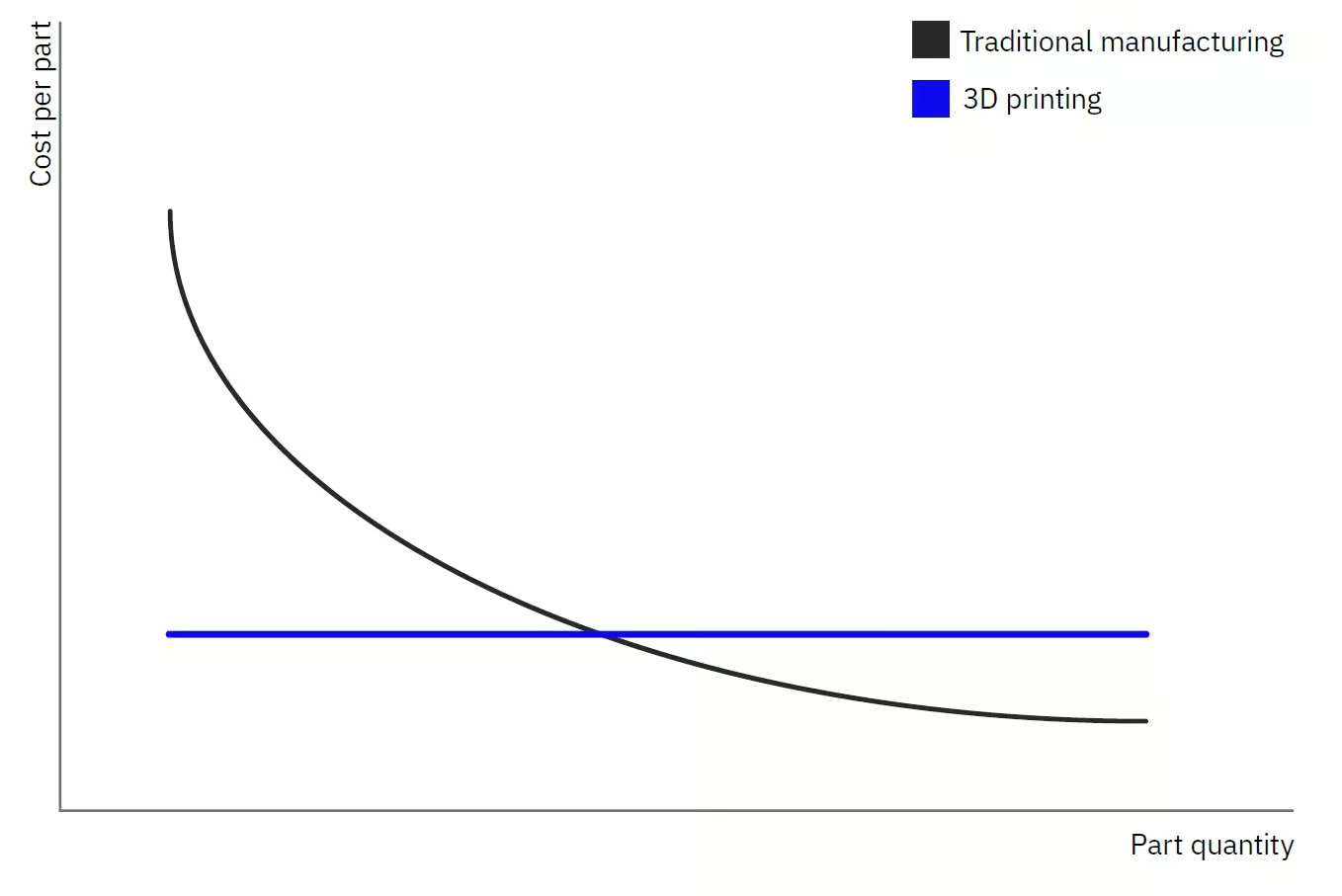
Cost per part based on production volume
For large quantities, additional set-up processes for injection molding and machining make more sense. The time you spend on set-up pays off if you use the machine jigs or injection mold for mass production of large quantities of parts, as the processes themselves are relatively fast and inexpensive. So we need to look at the volume of parts required. If you are aiming for large volumes, traditional production methods probably make more sense. However, if you’re aiming for low volumes – as may be the case with prototypes, custom/highly specialized tooling or replacement parts – 3D printing almost always makes the most sense from a cost standpoint.
Requirements for the material properties
When considering materials and manufacturing processes, you also need to know the properties required for your specific application. What stresses and strains will the part be subjected to? What temperature thresholds must the part withstand? Will the part be exposed to moisture or chemicals?
Certain parts may require the structural strength of steel. But just because a part is currently made of metal doesn’t mean it has to be made of metal. In fact, many parts are made from metal simply because metal is a common and reliable material for high-performance parts. In reality, carbon fiber composites can often meet or exceed the requirements of these parts.
Understanding the following property requirements for your part will give you a much better appreciation of the possibilities of 3D printing.
- Load
- Stiffness
- Durability
- Thermal deformation
- Special properties
- ESD – resistance to electrostatic discharge
- Flame resistance
- Chemical resistance
- Electrical conductivity
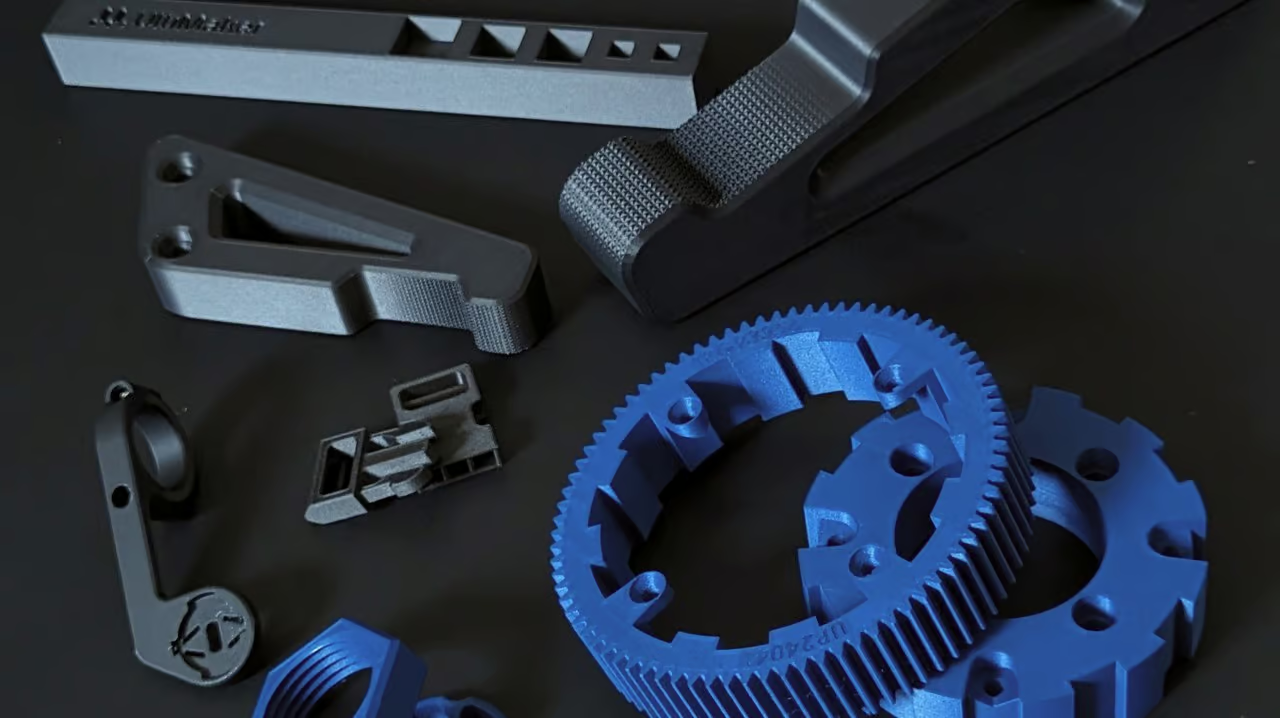
Multi-material 3D printing – joining soft and hard materials in FDM 3D printing
Unlocking multi-material potential with material interlocking on UltiMaker 3D printers
Material interlocking is an innovative new feature for 3D printing that enables the seamless joining of rigid and flexible materials, opening up a wide range of possibilities for the production of highly functional parts. This feature addresses one of the biggest challenges in multi-material printing: ensuring strong, cohesive bonds between materials with different properties.
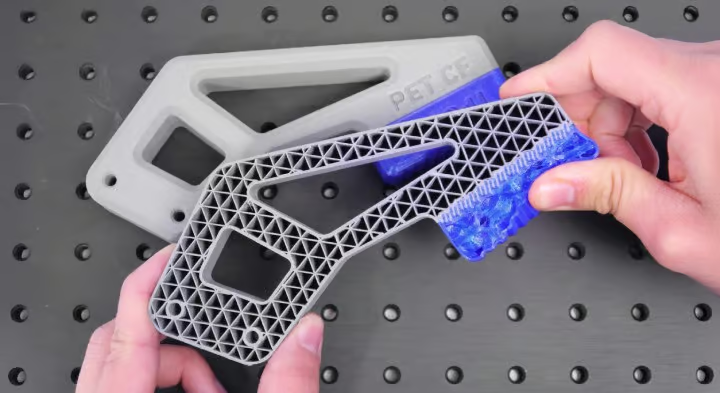
For example, imagine a mechanical gripper with soft TPU tips printed in one piece with a rigid PET carbon fiber (PET CF) body. The carbon composite provides the strength and structural integrity the gripper needs, while the TPU tips provide the flexibility required for smooth, precise gripping of delicate objects.
Material Locking overcomes this challenge by introducing an automatic locking pattern generated with the UltiMaker Cura’Create Locking Pattern’ setting. This pattern physically locks the materials together during the printing process, ensuring that the materials bond securely regardless of their individual compatibility. The strength of the bond is therefore not determined by the chemical or thermal compatibility of the materials, but by the inherent durability of the individual materials themselves.
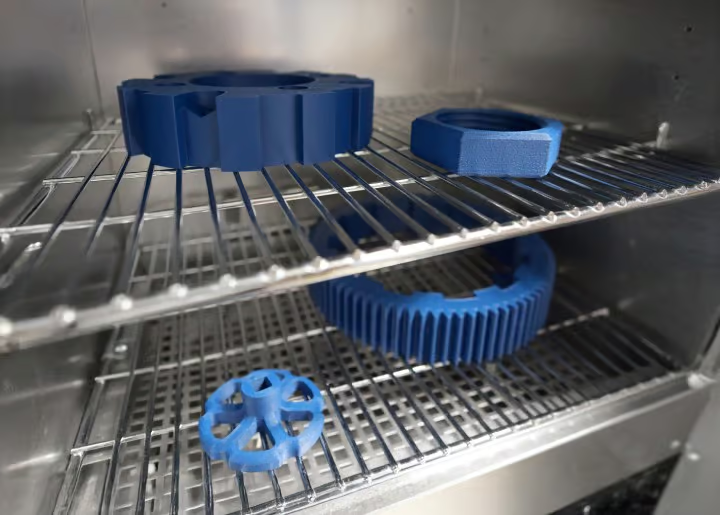
Tempering of UltiMaker carbon composites
Annealing is a heat treatment process that improves material properties by reducing stresses and increasing ductility. A material is heated to a certain temperature and then slowly cooled. PET CF, a semi-crystalline polymer, is well suited for annealing because its ordered structure can be further crystallized by heating it to the glass transition point, which increases its strength.
After annealing, PET-CF parts can achieve up to 30% higher strength, 10% higher stiffness and improved heat resistance from 80°C to 180°C, making them a strong, heat-resistant alternative to metal and carbon fiber parts.
While annealing increases the strength and heat resistance of PET-CF, it also has some drawbacks. The parts can shrink, warp or bend during heating, but this can be managed. In addition, impact strength and Z-axis adhesion can decrease, with Z-axis tensile strength decreasing by up to 15%, so careful print alignment is essential for optimal durability.
Cura’s annealing pre-set profile automatically compensates for shrinkage and adjusts dimensions to ensure an accurate final part size without manual adjustments. This simplifies the process and delivers precise results effortlessly.
Application examples
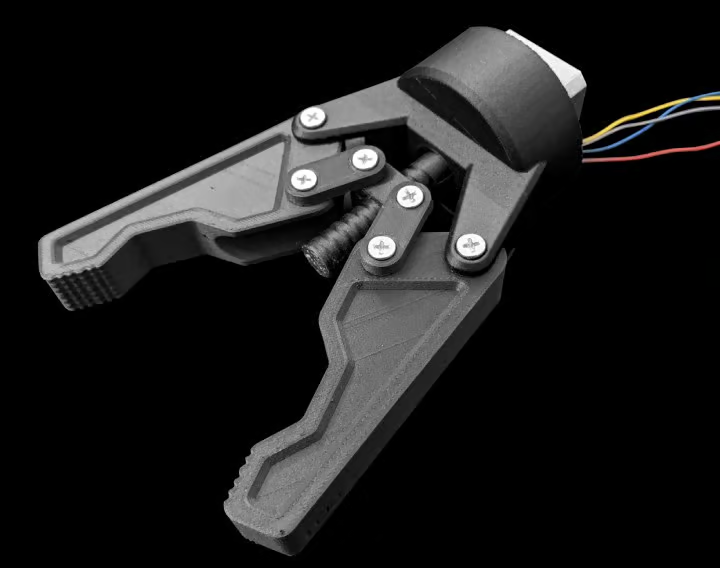
End-of-arm tooling
In manufacturing automation, robotic arms are ubiquitous as tools for streamlining everyday tasks with unparalleled precision. End effector tools come in all shapes and sizes, so the application possibilities are almost limitless with the ability to 3D print. The payload of the robotic arm is limited, so reducing the weight of the tool through 3D printing with a carbon fiber composite material can be a great help. This gives the robotic arm the ability to increase its payload, speed and/or maneuverability.
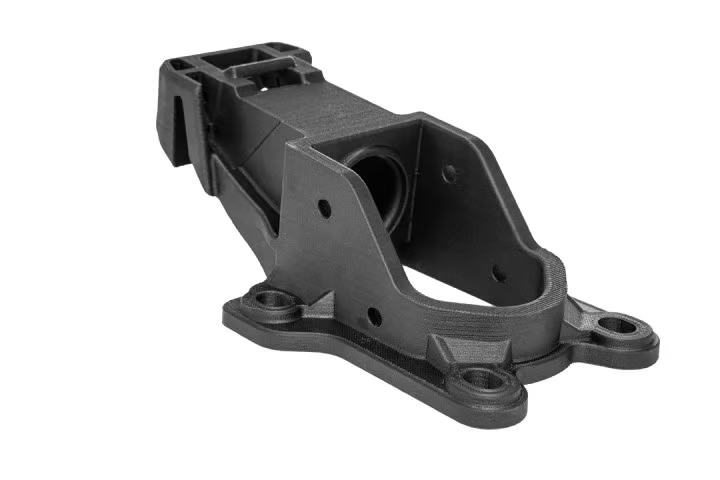
Air freight holder
This holder is used to securely fasten air freight or to safely stow components in the air freight packaging. Accordingly, it must be temperature-resistant, very strong and stable as well as resistant to chemicals – application requirements that are all met by PPS CF. Another advantage of additive manufacturing is that the design can be adapted again and again, with all iterations meeting the necessary certifications thanks to the material used.
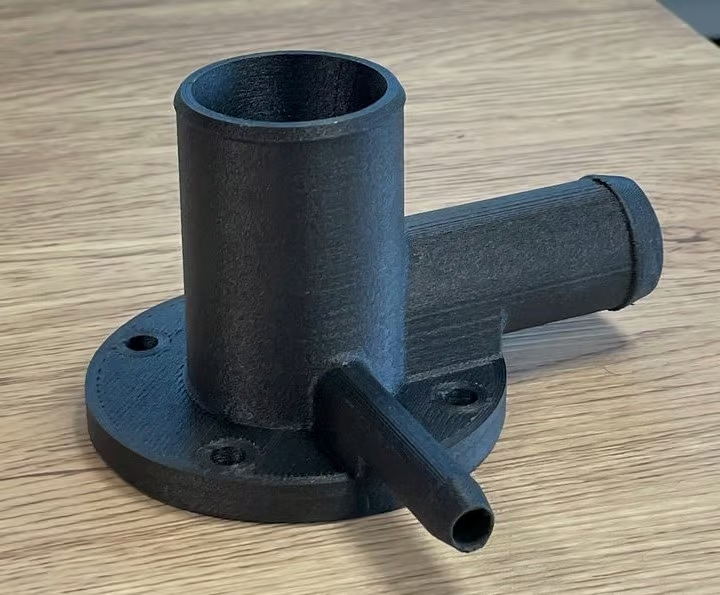
High-pressure pump valve
This pump valve is installed in a train to transfer liquids or chemicals. However, as it was an obsolete component (it was no longer manufactured), the entire pump assembly had to be replaced, at a cost of around USD 5,300. By using PPS CF, it can now be 3D printed and still meet the UL94 V0 standard for non-flammability as well as for use with hot acids.
UltiMaker carbon fiber composites
PET Carbon Fiber
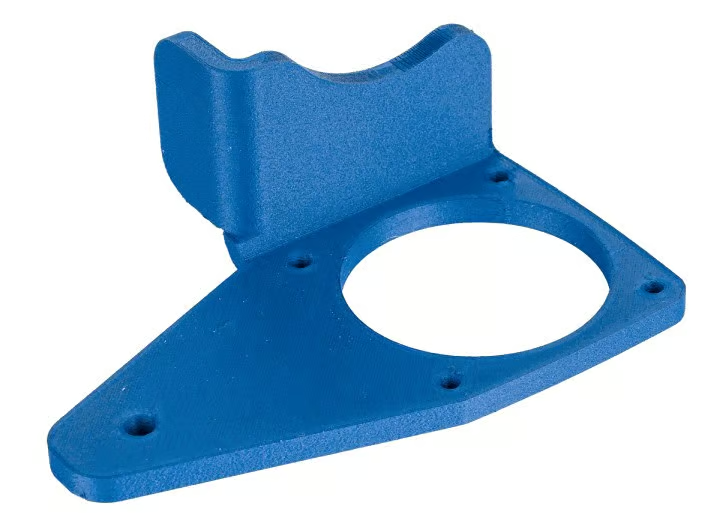
PET carbon fiber has high strength, stiffness and temperature resistance, which can be further improved by annealing. Annealing increases the temperature resistance of your parts from 80°C to an incredible 180°C, while increasing strength by 30% and stiffness by 10%. PET CF is also less sensitive to moisture and very reliable, making it much easier to print than other composites.
Compatibility
| 3D printer | Factor 4, S7, S5, S3 |
| Extruder | CC 0.4, CC 0.6, HT 0.6 |
Technical data
| Weight of the coil | 750 g |
| Diameter of the filament | 2.85 mm |
| Hardness | 76 Shore D (tempered 81 Shore D) |
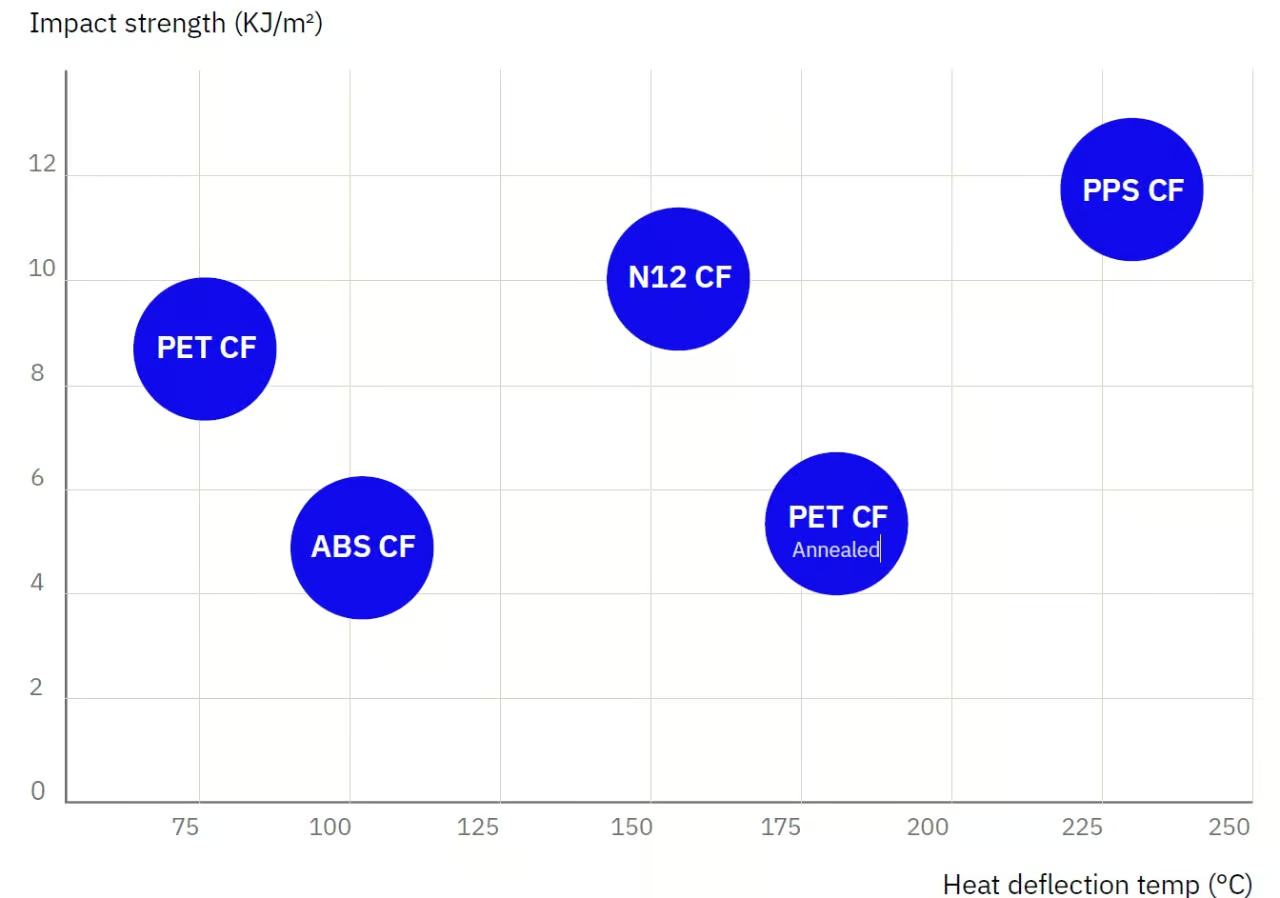
| Impact strength | 8.6 kJ/m² (annealed 5.3 kJ/m²) |
| Thermal resistance | 76°C (annealed 181°C) |
ABS Carbon Fiber
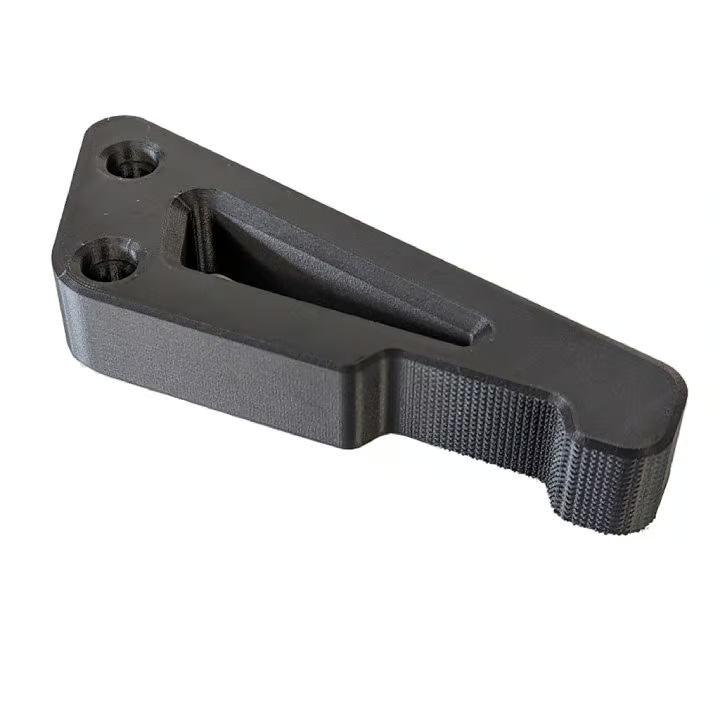
This material combines the reliability of ABS in the Method series with the performance of carbon fiber. ABS carbon fiber is also the only composite material in the Method Series that is compatible with the RapidRinse carrier material, allowing for limitless design flexibility with easy and convenient carrier removal.
Compatibility
| 3D printer | Method X, Method XL |
| Extruder | 1C, LABS |
Technical data
| Weight of the coil | 500 g |
| Diameter of the filament | 1.75 mm |
| Tensile strength | 59 MPa |
| Impact strength | 4.7 ± 0.3 kJ/m² |
| Thermal resistance | 102°C |
Nylon 12 Carbon Fiber
Similar to the carbon fiber Nylon 6, the Nylon 12 variant offers the advantages of strength, stiffness and low weight. Unlike Nylon 6, Nylon 12 is more resistant to moisture absorption, making it slightly easier to print and giving the printed part a cleaner appearance without the need for post-processing.
One disadvantage of Nylon 12 compared to Nylon 6 is that it generally has a lower HDT – so you really just need to weigh up what is most important for your specific application.
Compatibility
| 3D printer | Method X, Method XL |
| Extruder | 1C, LABS |
Technical data
| Weight of the coil | 500 g |
| Diameter of the filament | 1.75 mm |
| Tensile strength | 6,000 MPa |
| Impact strength | 9.9 kJ/m² |
| Thermal resistance | 102°C |
PPS Carbon Fiber
PPS CF is a carbon fiber reinforced polyphenylene sulfide (PPS) filament and the next higher composite material for the UltiMaker Factor 4. It has excellent performance yet is easy to print with the UltiMaker HT core. PPS CF prints reliably and with high precision on the UltiMaker Factor 4 and produces flame retardant, temperature resistant (>230°C) and chemical resistant (insoluble in all solvents below 200°C) parts. It is characterized by high strength and rigidity and offers a long service life. Replace metal and PEEK parts with a cost-effective and easy-to-manufacture solution.
PPS CF meets the UL94 V0 standard for flame retardancy and offers an additional layer of safety and reliability. Flame retardancy is critical for applications where there is a risk of fire, such as in the electronics and transportation industries. PPS CF’s compliance with this standard ensures that your parts not only perform well, but also contribute to a safer working environment.
Compatibility
| 3D printer | Factor 4 |
| Extruder | HT 0.6 |
Technical data
| Weight of the coil | 500 g |
| Diameter of the filament | 2.85 mm |
| Hardness | 80 Shore D |
| Impact strength | 11.6 kJ/m² |
| Thermal resistance | 230°C |
Selecting the right composite material for your application
When selecting composite materials for 3D printing or manufacturing, it is important to know the key performance properties to ensure that the material will perform well in real-world conditions.
Two important properties to consider are heat deflection temperature and impact strength. Heat deflection temperature refers to the temperature at which a material begins to deform under a given load and is therefore an important factor for applications exposed to high heat. Impact strength, on the other hand, measures the ability of a material to withstand sudden forces or impacts without breaking, and is therefore critical for applications subject to mechanical stress or potential collisions.
Both properties are critical to the suitability of a composite material for demanding environments, as they directly affect the performance, durability and reliability of the material. Knowing these properties will help ensure that the material you choose meets the specific requirements of your project, whether it requires heat resistance, toughness or a mixture of both.
UltiMaker printer
The UltiMaker portfolio offers a range of 3D printers that are compatible with the most advanced carbon composites and TPU materials and are suitable for any application.
Simple prototyping with the UltiMaker S7
The UltiMaker S7 is the latest model in the award-winning S Series of professional 3D printers used by designers and engineers around the world. Produce prototypes that look and feel like they came straight out of an injection mold.
Discover now
Tools & fixtures with the Method XL
A large build volume and fully heated chamber allow the Method XL to quickly assemble large tools, jigs and fixtures. Made of durable and dimensionally stable ABS, high-strength nylon carbon fiber, you can use the assembly tools without compromising between ergonomics and performance.
Discover now
Production parts with the UltiMaker Factor 4
With a 340°C print core and an actively temperature-controlled build chamber, the Factor 4 can print non-critical production parts from high-performance materials such as PPS carbon fiber. With a detailed report on the deviations of the extrusion parameters from the target values, their position and their severity in the 3D model, you receive validated part safety after the completion of each printing process.
Discover now