

Formlabs Form 4L
Large components, faster than ever before
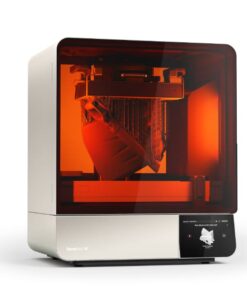
The Formlabs Form 4L is a record-breaking fast MSLA 3D printer that combines an industry-leading materials library with a reliable and accurate printing system. With the Form 4L ecosystem’s simple workflow, unmatched reliability and superior print part quality, you can turn your ideas into reality faster than ever before.
The speed of the Formlabs Form 4L is based on Formlabs’ new Low Force Display™ technology, a powerful printing system consisting of high-performance LEDs, collimator lenses, optical filters and a robust liquid crystal display. Together, these components ensure lightning-fast curing of the individual resin layers – regardless of the size and number of parts. By maintaining tight tolerances, the Form 4L always delivers parts that meet your design parameters, regardless of the resin.
Do you want to print with biocompatible materials? Get to know the Form 4BL.
Order Formlabs Form 4L Order Formlabs Form 4BL Request a quote Benefit from the upgrade programLarge parts
Construction volume of up to 353 x 196 x 350 mm
Speed
Large parts in under 6 hours
Precision
46 µm pixel size with edge smoothing
Versatile
Industry-leading materials for every application
Reliable
Rigorously tested for maximum reliability
Intuitive
Can be learned by everyone within 15 minutes
No more problems with large components.
Print single large parts or multiple small parts in one job on the Formlabs Form 4L to speed up product development or keep production running.
Production volume
4.6x
larger construction volume than the Form 4
Form 4L
353 x 196 x 350 mm
or 24.2 L
Shape 4
200 x 125 x 210 mm
or 5.2 L
Technical data of the Formlabs Form 4L and Form 4BL
View specifications
| 3D printer | Form 4L | Form 4BL |
|---|---|---|
| Technology | Masked stereolithography (MSLA) | Masked stereolithography (MSLA) |
| Printer module | Low Force Display™ (LFD) | Low Force Display™ (LFD) |
| Key components of the printing system | Backlight unit Light processing unit 4 (LPU 4) Release texture Resin container for flexible films Intelligent control systems Automatic high-speed resin handling |
Backlight unit Light processing unit 4 (LPU 4) Release texture Resin container for flexible films Intelligent control systems Automatic high-speed resin handling |
| Light source | Backlight unit: 145 LEDs with uniform wavelength, a plano-convex lens arrangement and integrated air cooling 405 nm optical wavelength 16 mW/cm² optical power intensity transmitted to the curing plane 46 µm pixel size |
Backlight unit: 145 LEDs with uniform wavelength, a plano-convex lens arrangement and integrated air cooling 405 nm optical wavelength 16 mW/cm² optical power intensity transmitted to the curing plane 46 µm pixel size |
| Maximum printing speed¹ | 80 mm/hour | 80 mm/hour |
| Typical printing speed² | Average: 24 mm/hour for all materials Range: 20-35 mm/hour depending on material |
Average: 24 mm/hour for all materials Range: 20-35 mm/hour depending on material |
| Typical dimensional tolerances³ | 1-30 mm Characteristics: ±0.15% (lower limit: ±0.02 mm) 31-80 mm Characteristics: ±0.3% (lower limit: ±0.06 mm) 81-150 mm Characteristics: ±0.3% (lower limit: ±0.15 mm) |
1-30 mm Characteristics: ±0.15% (lower limit: ±0.02 mm) 31-80 mm Characteristics: ±0.3% (lower limit: ±0.06 mm) 81-150 mm Characteristics: ±0.3% (lower limit: ±0.15 mm) |
| Surface accuracy (restorative models)⁴ | On average with Precision Model Resin: 99.9% of surfaces within 100 μm of the CAD model 96.7% of surfaces within 50 μm of the CAD model 71.4% of surfaces within 25 μm of the CAD model |
On average with Precision Model Resin: 99.9% of surfaces within 100 μm of the CAD model 96.7% of surfaces within 50 μm of the CAD model 71.4% of surfaces within 25 μm of the CAD model |
| Materials (resins) | 19 industry-leading Formlabs materials or third-party materials via the Open Platform. New materials are developed on a regular basis. | 32 industry-leading Formlabs materials, including 12 biocompatible materials, or third-party materials using the Open Platform. New materials are developed on a regular basis. |
| Biocompatible materials | No (available on Form 4BL) | Yes |
| Construction volume (W x D x H)⁵ | 253 × 196 × 350 mm / 24.2 liters | 353 × 196 × 350 mm / 24.2 liters |
| Construction area | 692 cm² | 692 cm² |
| Maximum part length⁶ | Not measured | Not measured |
| XY resolution⁷ | 46 µm with preset edge smoothing for sub-pixel resolution First-class implementation of fine, sharp details compared to the Form-3L series |
46 µm with preset edge smoothing for sub-pixel resolution First-class realization of fine, sharp details compared to the Form-3L series |
| Layer thickness⁸ | 25-200 µm | 25-200 µm |
| Resin cartridges | 2 | 2 |
| Resin cartridge type | Next generation resin cartridge 5-10x faster filling 63% less waste 30% less space required |
Next generation resin cartridge 5-10x faster filling 63% less waste 30% less space required |
| Resin heater | High-speed conduction resin heater with infrared temperature detection | High-speed conduction resin heater with infrared temperature detection |
| Internal temperature | Automatic heating of the resin to 25-45 °C, depending on the material | Automatic heating of the resin to 25-45 °C, depending on the material |
| Force measurement | Z-axis force sensor: Automatically optimizes print quality and print speed based on part geometry and selected material. | Z-axis force sensor: Automatically optimizes the print quality and print speed based on the part geometry and the selected material. |
| Supports | Automatically generated Light touch removal |
Can be generated automatically Light touch removal |
| Design/CAD specifications | Show design manual (PDF) | Show design manual (PDF) |
| Printer dimensions (W x D x H) | 66.4 × 52.8 × 79.4 cm | 66.4 × 52.8 × 79.4 cm |
| Minimum dimensions for access (W x D x H) | 88.9 × 116.9 × 81.3 cm | 88.9 × 116.9 × 81.3 cm |
| Weight of the printer | 58.5 kg | 58.5 kg |
| Operating environment | 18-28 °C | 18-28 °C |
| Power requirements | 100-240 VAC 9 A 50/60 Hz 900 W |
100-240 VAC 9 A 50/60 Hz 900 W |
| Connectivity | Wi-Fi (2.4 and 5 GHz; IEEE 802.11 b/g/n/ac, WPA/WPA2) Ethernet (1000 Mbit) USB-C 2.0 |
Wi-Fi (2.4 and 5 GHz; IEEE 802.11 b/g/n/ac, WPA/WPA2) Ethernet (1000 Mbit) USB-C 2.0 |
| Printer control⁹ | nteractive 7-inch touchscreen 1280 × 800 resolution Languages: English, German, French, Spanish, Italian, Japanese, Traditional Chinese, Simplified Chinese |
nteractive 7-inch touchscreen 1280 × 800 resolution Languages: English, German, French, Spanish, Italian, Japanese, Traditional Chinese, Simplified Chinese |
| Warnings |
Touchscreen alerts SMS/email via the dashboard Loudspeaker for audio alerts |
Touch screen alerts SMS/e-mail via the dashboard Loudspeaker for audio alerts |
| Sensors and control systems | 6 upgraded sensors for precise control of resin temperature, resin level, printing force and printing status: High-speed conduction resin heater with infrared temperature detection Ultrasonic resin level sensor: controls the resin in the tank Z-axis force sensor: controls and minimizes the printing forces Resin cartridge load cell: measures the exact resin level in the cartridge Printer levelling sensor Camera |
6 upgraded sensors for precise control of resin temperature, resin level, print force and print status: High-speed conduction resin heater with infrared temperature detection Ultrasonic resin level sensor: controls the resin in the tank Z-axis force sensor: controls and minimizes the print forces Resin cartridge load cell: measures the exact resin level in the cartridge Printer levelling sensor Camera |
| Camera | Integrated camera 2592 x 1944 resolution (5MP) Remote monitoring, print history and time-lapse prints Can be easily deactivated, covered or removed |
Integrated camera 2592 x 1944 resolution (5MP) Remote monitoring, print history and time-lapse prints Can be easily deactivated, covered or removed |
| Software | PreForm, Dashboard, Fleet management | PreForm, Dashboard, Fleet management |
| PreForm system requirements | Windows 7 (64-bit) and higher Mac OS X 10.12 and higher OpenGL 2.1 C++ runtime library from Microsoft (Windows only) 4 GB RAM (8 GB recommended) |
Windows 7 (64-bit) and higher Mac OS X 10.12 and higher OpenGL 2.1 C++ runtime library from Microsoft (Windows only) 4 GB RAM (8 GB recommended) |
| File types | STL, OBJ and 3MF file input FORM file output |
STL, OBJ and 3MF file input FORM file output |
| PreForm Print Setup functions | One-click printing Adaptive layer thickness for faster printing with fine details Remote printing Automatic alignment for optimal print position Automatic mesh repair Automatic overlay generation Advanced tools for manual overlay editing Rotate, Rotate, scale, duplicate and mirror Layer slicer for path inspection Custom print settings Available in multiple languages |
One-click printing Adaptive layer thickness for faster printing with fine details Remote printing Automatic alignment for optimal print position Automatic mesh repair Automatic overlay generation Advanced tools for manual overlay editing Rotate, Rotate, scale, duplicate and mirror Layer slicer for path inspection Custom print settings Available in multiple languages |
| Dashboard printer management features | Manage prints and printers from the cloud Track resin and tank usage over time SMS and email alerts Create company group accounts with administrators for easier sharing of printers and control of access |
Manage prints and printers via the cloud Track resin and tank usage over time SMS and email alerts Create company group accounts with administrators for easier sharing of printers and control of access |
| Estimated service life of the resin tank¹⁰ | 75,000+ layers with each Formlabs material Example: approx. 190 prints with an average height model (39 mm high), any resin and 100 µm layer height |
75,000+ layers with each Formlabs material Example: approx. 190 prints with a model of average height (39 mm high), any resin and 100 µm layer height |
| Estimated service life of the light processing unit¹¹ | 600,000 – 1,900,000 layers, depending on material and layer height Example: approx. 2,800 prints when using models with average height (39 mm), Grey Resin V5 and 100 µm layer height |
600,000 – 1,900,000 layers, depending on material and layer height Example: approx. 2,800 prints when using models with average height (39 mm), Grey Resin V5 and 100 µm layer height |
¹ With Fast Model Resin and 200 µm layer height on Form 4 Series. Based on actual print time of a range of test parts covering common applications in engineering, product design, manufacturing and dentistry. With Draft Resin V2 and 200 µm layer height on Form 3 Series. Based on 75th percentile of actual print speed of reported prints from 2023.
² Average of all materials when printing at 100 µm layer height, weighted by material popularity. The print speed varies depending on the material, layer height and part geometry. The spectrum is based on the materials with the slowest median printing speed and the highest median printing speed.
With Grey Resin V5 and 100 µm layer height, post-cured for 5 minutes at room temperature. A test model with structures in different sizes, 3D-printed on three different printers.
⁴ At 50 µm layer height. Tested with a full arch dental model with dies, four models per print job, printed on three different printers and post-processed according to the recommended settings.
⁵ If you print a job that is higher than 19.0 cm on the Form 4/B, a job that is higher than 30.5 cm on the Form 4L/4BL or a job that is higher than 18.5 cm on the Form 3/B/+, you must also remove the resin tank when removing the print. PreForm displays a warning if a job exceeds this height limit.
⁶ Assuming a part printed with support structures that resembles a rectangular prism 12.5 cm deep and 1 cm high.
⁷ The XY resolution describes how precisely the printer can cure resin in the XY plane (horizontal). It corresponds to the pixel size of the Light Processing Unit 4 and Light Processing Unit 4L.
⁸ Available layer heights vary depending on the material. See our material compatibility table to check availability.
⁹ Additional languages other than English will be available with future firmware updates for the Form 4 series.
¹⁰ The exact lifetime of a resin tank depends on the printed layers, physical wear and accidental damage.
¹¹ At 100 µm layer height. The exact service life of an LPU depends on the total amount of light energy that passes through the module, which in turn depends on the number of printed layers, the material, the layer height and accidental damage. If a replacement becomes necessary, the LPU 4 or LPU 4L can be replaced easily, quickly and cost-effectively by the user.
Speed on a grand scale. Even large components in under 6 hours.


The Formlabs Form 4L delivers outstanding components that always fit together.
Formlabs engineers have tested hundreds of printed parts to ensure that each material meets the most reliable standards, right out of the box.


Sharpest details
Highly collimated light and 46 µm pixel size with preset anti-aliasing for sub-pixel resolution.
Smooth surfaces
Lower detachment forces, light touch supports and 46 µm pixel size with predefined edge smoothing.
High-precision assemblies
±0.15 % XY dimensional tolerances so that the assemblies always fit together.
Unrivaled reliability. Regardless of component size or throughput.
The Formlabs Form 4L workflow: simply explained in 4 steps.
Discover the Formlabs Form 4L.
The illumination unit uses 145 LEDs and collimator lenses to generate a uniform surface projection of extremely strong light. It cures the resin quickly and precisely, guaranteeing lightning-fast printing times, excellent print quality and consistent precision across the entire build platform.
The Light Processing Unit 4L (LPU 4L) precisely masks the light from the lighting unit in the shape of the cross-section. In combination, the lighting unit and the LPU 4L ensure extremely high printing speed, accuracy and print quality on the entire build platform. The LPU 4L is durable, resistant to damage and easy to replace.
There is a special film on the top of the Light Processing Unit. This micro-textured optical film has been specially developed and provides an airflow between the resin container and the Light Processing Unit. It significantly reduces the pull-off forces so that surface quality, detail, precision and reliability are not compromised even at record speeds.
In the Formlabs Form 4L MSLA 3D printer, six control systems precisely measure the temperature, resin level, printing forces and print status and keep these values constant. Together, they ensure that consistent printing results are achieved on every printer and for every job.
The liquid resin is held in the Formlabs Form 4L Resin Tank in the printer and forms a carrier system on which the liquid resin cures. A two-layer, flexible foil film is used for this. It significantly reduces peel forces, allowing you to print at extremely high speeds without compromising surface finish, fine features, accuracy or reliability.
The Formlabs Form 4L has an integrated system for fast, precise and low-waste resin dispensing, making material changes easy. You don’t have to worry about your printer running out of resin and can change material in <1 minute. The Form 4L is still one of the only SLA printers on the market to offer this feature.
The Formlabs Form 4L Ecosystem.
New
Price range: 7'291.93 CHF through 12'250.81 CHF excl. VAT


