

Uncategorized
MakerBot Nylon for the MakerBot Method

Nov
MakerBot announces Nylon as a new material for the MakerBot Method and Method X in its growing portfolio of engineering materials. This brings the total number of materials for the METHOD platform to 8 materials. The company continues to promote the accessibility of industrial additive manufacturing for smaller companies. The MakerBot Nylon material is optimized for high abrasion resistance. Nylon is widely used for functional prototypes and end-use applications in the automotive, industrial and consumer goods industries.
Due to its high bending, tensile and impact strength and its high thermal properties, with a heat resistance of up to 180°C, nylon has very interesting physical properties. Nylon is therefore ideal for components that are subject to repeated movements or forces, such as tools and fixtures, articulated parts, snap-fit joints, hinges, gears or air intakes. These parts are often exposed to increased heat due to friction and may require flexibility due to interaction with other parts.
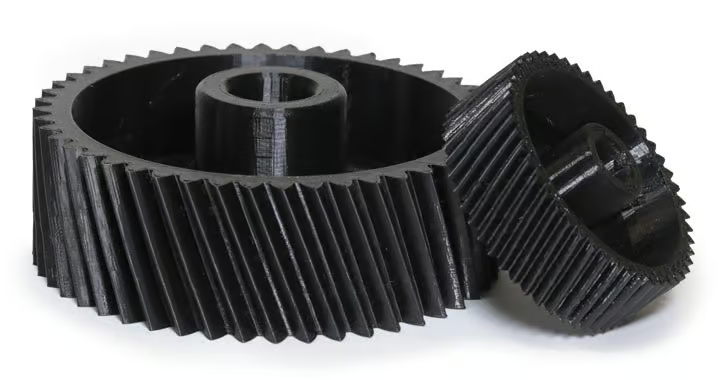
Nylon – safe and precise 3D printing
A series of built-in sensors help ensure that materials are stored in their optimal environment in the MakerBot Method – a feature previously only available in industrial 3D printers. In addition, the printing of nylon, in combination with MakerBot’s water-soluble PVA support material, enables printing of complex geometries on the MakerBot Method and Method X.
Nylon is sensitive to moisture and can easily absorb water from the air. This can cause filaments stored in moderate humidity to produce parts with warping and distortion. The MakerBot Method’s sealed material bays can store nylon free from damaging humidity. A new spool drying feature also allows the MakerBot Method X’s heatable build chamber to be used to dry nylon spools that have been compromised by moisture absorption.


