Uncategorized
CAD and 3D printing at the Aemtler A elementary school in the city of Zurich

Aug
From the sketch to 3D printing
3D printing is fascinating. I noticed this a few years ago at an exhibition for museums and design on the subject of 3D printing. The idea that a printer can work its way into three-dimensional space challenges children’s imagination.
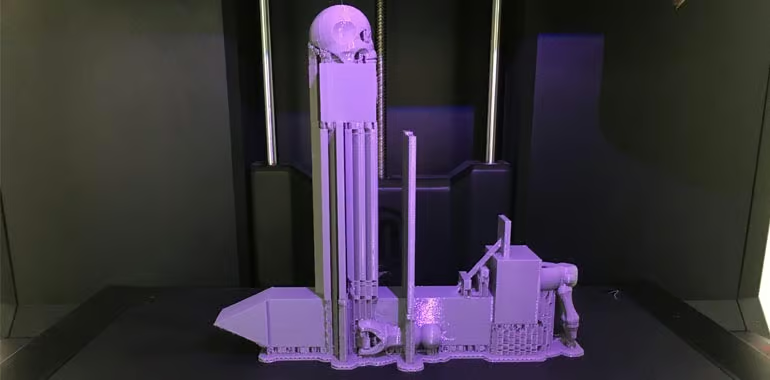
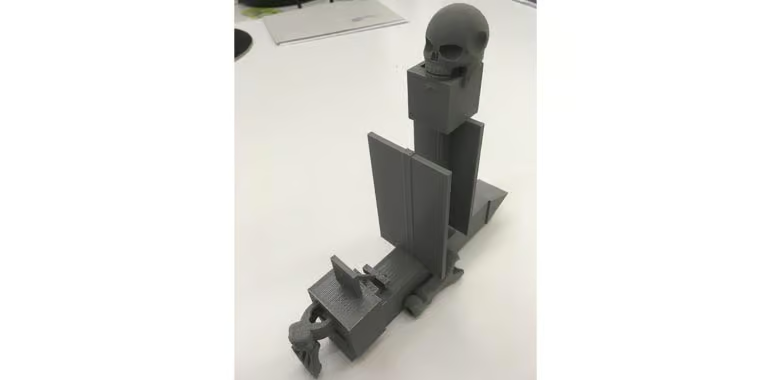
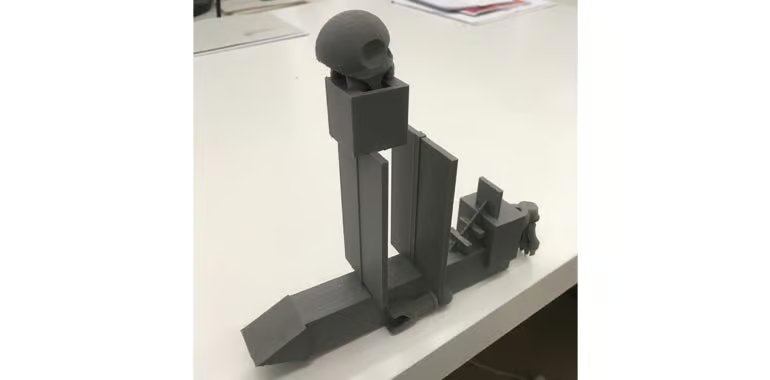
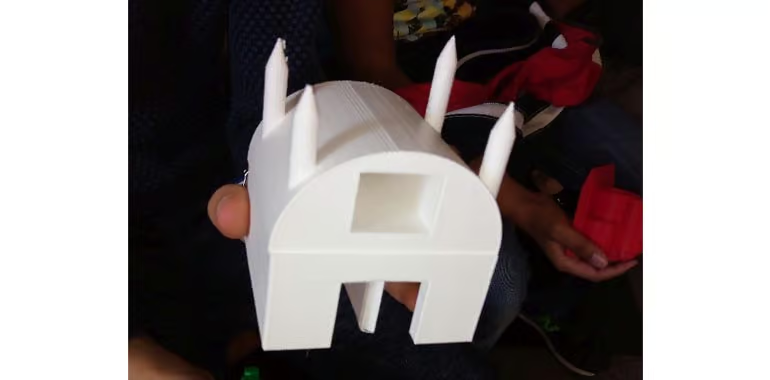
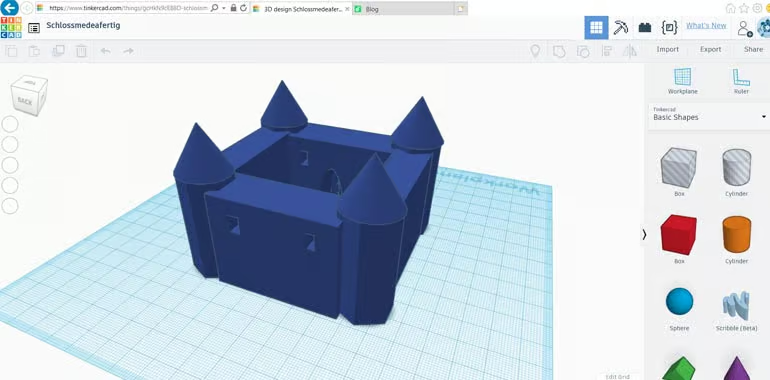
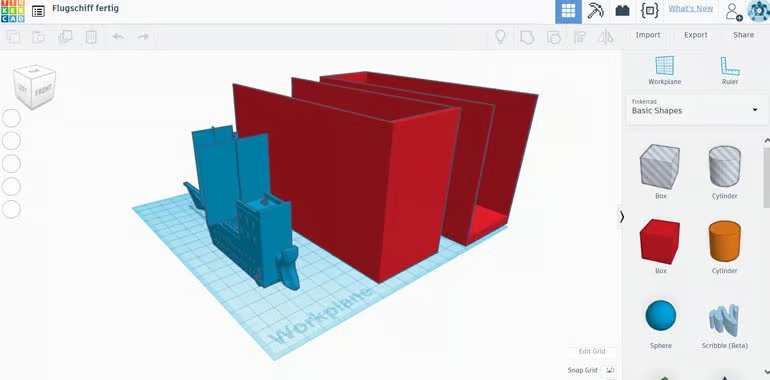
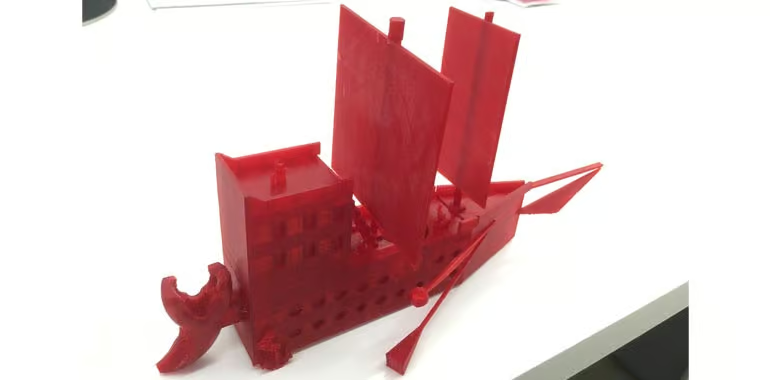
The children in the Aemtler A gifted and talented group were immediately enthusiastic about the idea of 3D printing something. The topic of 3D is probably omnipresent, not least because 3D movies are so popular with children. Nevertheless, the first lesson was about clarifying the terms one-dimensional, two-dimensional and three-dimensional. The first task was then to sketch a fantasy ship on an A4 sheet of paper. After a brief introduction to the most important tools in the program, the children got started. Some children now tried to construct the sketched ships in Tinkercad, others were less interested in ship design and designed a game controller, a castle or a pencil holder…
The web-based program Tinkercad is very intuitive to use. The children therefore found their way around it very quickly. Nevertheless, both the children and the teacher were repeatedly faced with major challenges. Why has my ship suddenly disappeared? How can the objects be put together? Why does my pencil holder suddenly only have one color? etc… However, a solution was usually found and many children were able to continue working from home thanks to the web-based program.
As the school itself does not yet have its own 3D printer, the search for a way to print turned out to be quite difficult.
Conclusion: The Tinkercad program is very suitable for constructing objects with children. Children who are used to working with a PC and mouse or mousepad get to grips with it very quickly and well. The children’s motivation was huge. One pupil confessed to me after the visit to 3d-edu that she had never imagined 3D printing until she picked it up. She would never have believed that she could actually hold the object she had designed herself in her own hands.
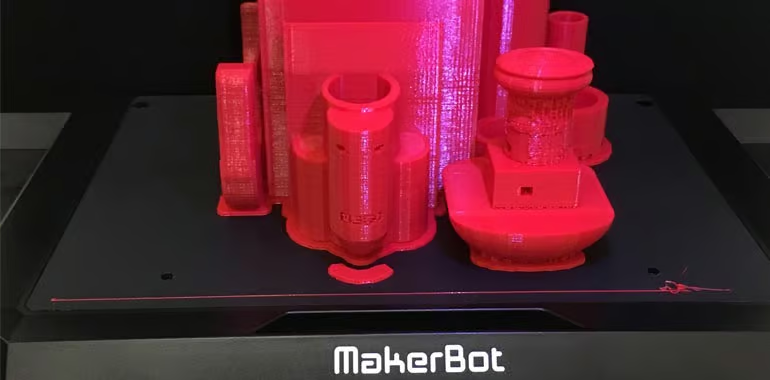
(All models were produced on a MakerBot Replicator+. This is also available in our DigitalGenial3D school package ).
Source: Field report Aemtler A, Primary School City of Zurich, N. Scheuring