

Uncategorized
Available soon: Desktop 3D printing of molded high-performance polyurethane parts
We are pleased to announce the launch of Formlabs polyurethane resins PU Rigid 650 Resin and PU Rigid 1000 Resin. These are Formlabs‘ toughest and most durable materials to date.
For the first time, you can print polyurethane parts in-house on a Formlabs Stereolithography (SLA) 3D printer. (Currently, the material is available for the Form 3, Form 3+, Form 3B, Form 3B+, Form 2 ). As a result, you can produce components that are resilient, robust and durable even under demanding conditions. Expand your possibilities in additive manufacturing with high-quality polyurethane resins from Formlabs. With PU 3D printing, you enable product designers, engineers and others to explore new ways of polyurethane manufacturing for innovative geometries and products. The polyurethane resin range currently includes the following materials:
PU Rigid 650 vs. PU Rigid 1000
PU Rigid 650 Resin: This allows you to produce tough and flexible polyurethane parts that can withstand extreme impacts and demanding applications while retaining their dimensional stability even under load.
PU Rigid 1000 Resin: Produce semi-rigid, robust and unyielding polyurethane parts that withstand heavy impacts and high-stress environments.
Find out more about the technical details of PU Rigid 650 Resin and PU Rigid 1000 Resin below. Find out for whom and for which applications we recommend the respective material. You will also learn about the production steps required to achieve the optimum material properties.
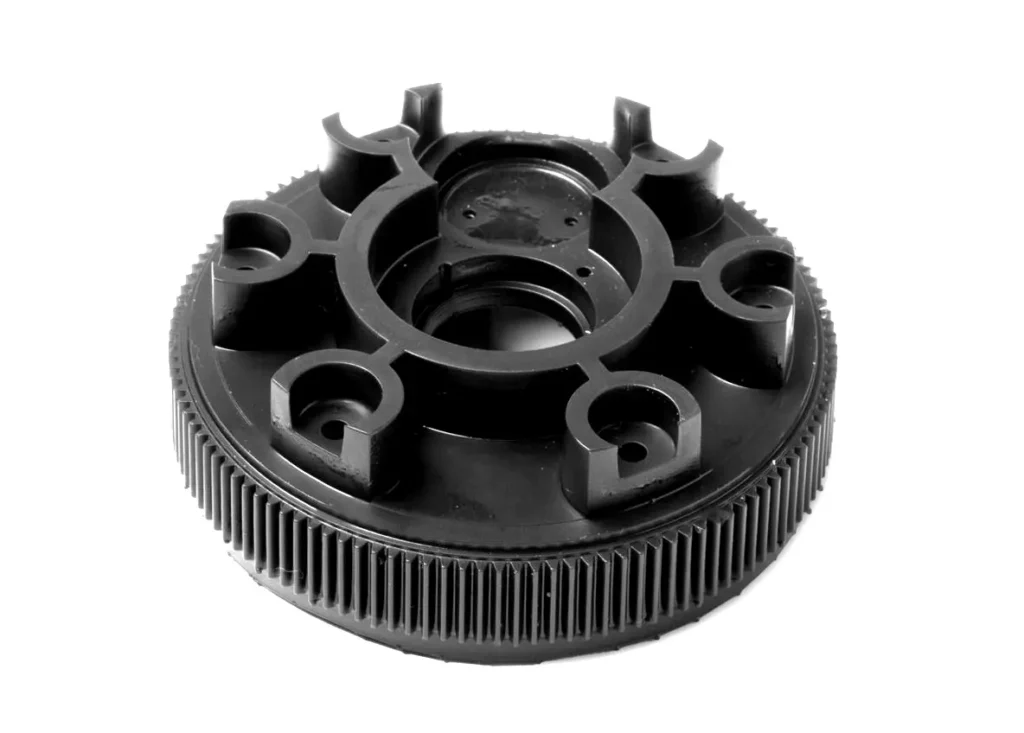
Polyurethane materials for various applications
Polyurethane synthetic resins are durable, resistant and long-lasting. This makes them ideal for 3D printing of components in both prototyping and production. Conventional SLA synthetic resins are made from acrylate polymers and can therefore lose their durability in the long term.
However, polyurethane resins are an unusual 3D printing material. This is because complicated chemistry is required to produce them. In the end, the Formlabs materials team opted for a hybrid chemical composition. This proprietary formulation consists of a combination of acrylate and urethane. This enables the 3D printing of PU on Formlabs SLA 3D printers. The PU resins meet the same standards and quality that you are used to from conventional Formlabs materials. However, the Formlabs PU 3D printing materials must undergo a moisture cure that allows the printed parts to transition to their finished polyurethane state.
Technical data – PU rigid synthetic resins
| Property | Formlabs PU Rigid 650 Resin | Formlabs PU Rigid 1000 Resin | ||
|---|---|---|---|---|
| Maximum tensile strength | 34 ± 3.4 MPa | 35 ± 3.5 MPa | ||
| Modulus of elasticity | 0.67 ± 0.06 GPa | 0.92 ± 0.09 GPa | ||
| Elongation | 170 ± 17 % | 80 ± 8 % | ||
| Impact strength according to Izod | 375 J/m | 170 J/m | ||
| Load cycles | >50 000 | >50 000 |
You can view the technical data sheets here:
Do you need the data sheet in another language? Please do not hesitate to contact us.
Applications for PU Rigid 650 Resin

Formlabs PU Rigid 650 Resin is ideal for the production of parts that need to withstand prolonged stress while retaining their shape. This includes shock-resistant and shock-absorbing parts such as:
- Wheels
- Bumpers
- Grippers and end effectors
- Damper
- Grommets
It is often necessary to join two parts together in order to use them for a load-bearing or permanent function. As PU Rigid 650 Resin retains its shape even after repeated use over a long period of time, it is perfect for the manufacture of:
- Bending hinges
- Plug-in hinges
- Snap connections
Applications for PU Rigid 1000 Resin

Just like PU Rigid 650, components made of PU Rigid 1000 can also withstand longer loads without losing their original shape. Due to the higher tensile strength of Formlabs PU Rigid 1000, it can withstand greater loads without breaking. This makes PU Rigid 1000 ideal for 3D printing rigid and robust end-use parts and for protecting sensitive components such as
- Fasteners and sockets
- Clamps and clamps
- Security structures
- Pipes and cables
- Bumpers
Examples of other demanding applications for which PU Rigid 1000 Resin is suitable:
- Bottle caps
- Buckles
- Bicycle pedals
Post-processing of polyurethane materials
Polyurethane requires a more elaborate work process and requires additional equipment and more consumables(tanks). More diligence is required in print preparation and post-processing to achieve consistently excellent results.
The work steps are comparable to printing with other materials. However, 3D printing PU requires additional equipment and significantly more post-processing time:
-
-
Print preparation: You prepare your 3D data for printing in the“Preform” software. PreForm supports you with the correct alignment of the printed parts and with customized settings for adding support structures.
-
Prepare the printer: The Formlabs PU rigid resins are supplied in an aluminum bottle to extend the shelf life. A funnel and an empty cartridge are also included. First shake the bottle well to ensure that the resin is thoroughly mixed. Then pour the resin from the bottle into the empty cartridge using the funnel provided.
For 3D printing with PU rigid resin, your printer must be in a drying cabinet. Once the preparations have been completed, you can simply insert the build platform, resin cartridge and resin tank into the printer. -
Print: You can now start printing. Simply follow the instructions on the printer‘s touchscreen as usual.
-
Post-processing: Briefly wash your building platform in a PGDA bath (propylene glycol diacetate) and then dry the parts in the air – preferably using compressed air. After drying and removing the supports, the parts must be placed in a humidity chamber for post-curing. Curing at 46 °C and 70% relative humidity completes the urethane reaction and turns your print into real polyurethane parts. A part with a wall thickness of 2 mm requires three days to fully cure. Thicker parts (10 – 12 mm) can take between 12-14 days.
-
Necessary accessories
While some equipment is optional, such as an air compressor to blow excess PDGA solvent off the surface of your prints, other equipment is mandatory. This includes a low humidity drying cabinet (2% RH) and a humidity chamber. These devices are necessary to control humidity, which significantly affects the performance of the final product. In addition, humidity also affects the shelf life of the open PU resin in the resin tank. For example, PU resin in a tank at 45% humidity can only be kept for 3 days – at 5% humidity for around 7 days.
NOTE
Due to the more demanding production environment and post-processing, as well as the shelf life of the opened consumables (PU resin and tank), we recommend Formlabs PU Rigid Resins exclusively to production customers or interested parties who have a corresponding throughput.
For more details on the steps involved in PU 3D printing, as well as recommendations for curing chambers or drying ovens, please contact our 3D printing experts. We also have the ability to produce individual sample prints to validate your application.
Get in touch with usHigh-performance technical materials for SMEs

The new Formlabs resins PU Rigid 650 Resin and PU Rigid 1000 Resin will soon be available for the Form 2, Form 3+ and Form 3B+.
We are looking forward to soon offering these materials, which were previously hardly available in 3D printing, to a wider audience at an affordable price. Once again, we will be able to make professional manufacturing tools accessible to smaller companies.
The PU Rigid 650 and PU Rigid 1000 complete the Formlabs material library. To see our complete library of technical materials for Formlabs SLA 3D printers, simply follow this link.
Please do not hesitate to contact us if you have any questions or require further information.


