

News
From idea to tangible product: how Broncolor is rethinking development processes with 3D printing
May
When developing new products, every detail counts – and often every hour. Bron Elektronik AG in Allschwil (Basel-Landschaft), known under the Broncolor brand, has stood for the highest quality in professional lighting technology for decades. But even a company with a long tradition has to constantly develop its processes in order to combine innovation and efficiency.
The introduction of 3D printing was a decisive step in this direction.
Swissness meets high-end technology
Founded in 1958 by Pierre Bron, Bron Elektronik is still a family-run company based in the Basel region. Development, production and assembly take place entirely in Switzerland – a claim that is reflected in the quality of the products.
Whether in advertising photography, e-commerce, scientific documentation or even forensics: Broncolor lighting systems are used wherever precision, reliability and absolute consistency are required. And these high requirements apply not only to the end products, but also to their development.
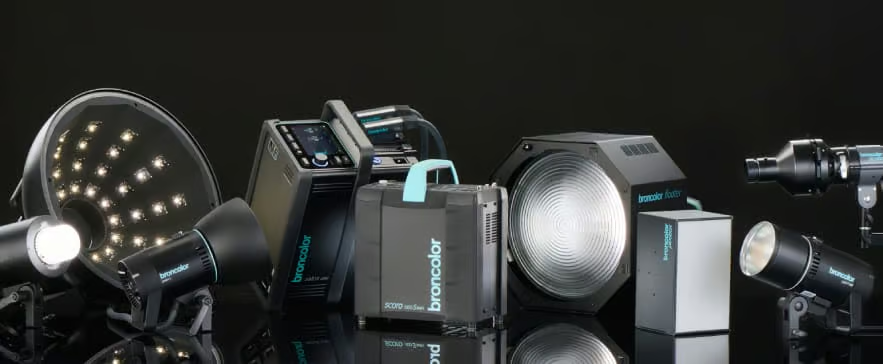
100% Made in Switzerland: Broncolor lighting systems meet the highest standards of precision, reliability and consistency.
From screen to hand: why 3D printing makes a difference
“I have noticed time and again that CAD sketches are often not enough to convey a truly realistic picture of the end product,” says Daniel Ferro, Head of Engineering and Product Design for 3D printing at Bron Elektronik. What used to often lead to misunderstandings is now much easier: instead of abstract models, physical prototypes are created within a very short space of time. This is made possible by the use of the Form 3+ from manufacturer Formlabs, which has been at Bron Elektronik for a good three years.
This has fundamentally changed the way of working in Allschwil. Ferro now designs components during the day, starts printing in the evening – and has the finished printed part in his hands the next morning. “The printer works for us overnight. That changes the entire work process.”
Faster decisions, better communication
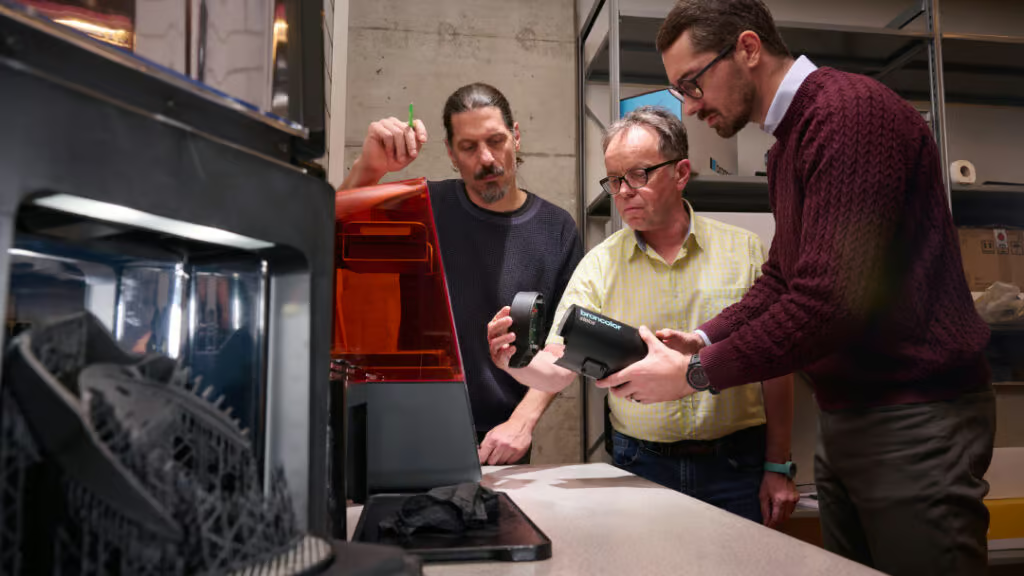
The biggest advantage lies not only in speed, but also in comprehensibility. A physical prototype makes ideas tangible – in the truest sense of the word. When a component makes the rounds at Bron Elektronik in a meeting, a shared understanding is created. Technical details can be better assessed, feedback is received earlier and is more substantiated. This applies not only internally, but also in exchanges with suppliers. Questions about production, tools and costs, for example, can be discussed directly on the object. “If you’re both holding the same part in your hand, you’re talking about the same thing,” says Ferro.
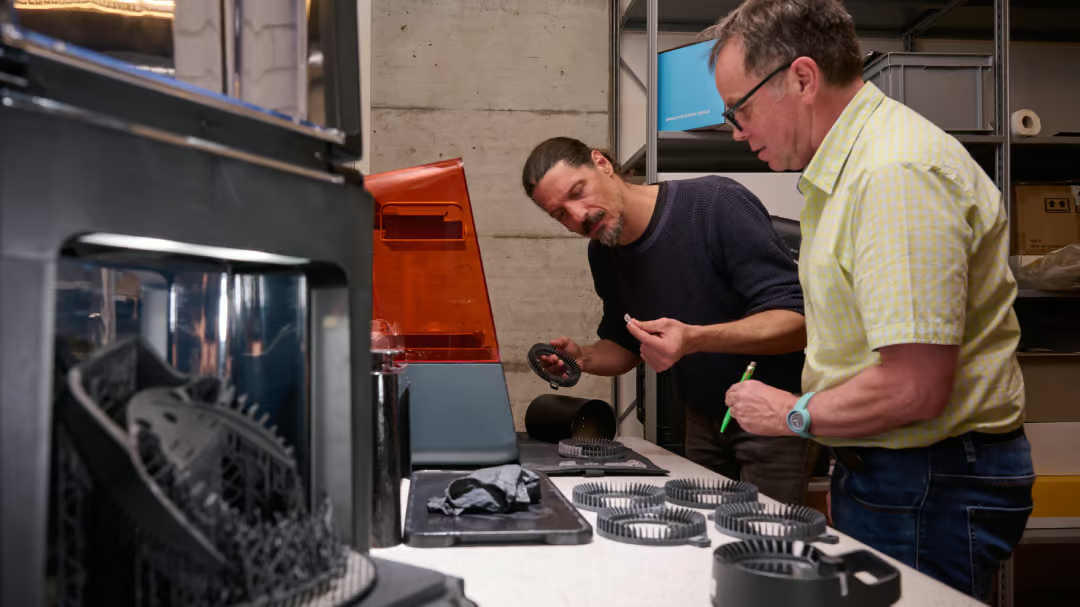
3D printing makes ideas tangible: Daniel Ferro from Broncolor (right) and Simon Fischer from 3D-EDU GmbH inspect a freshly printed set of prototypes. Picture Urs Recher
Practical example: The development of the Stelos handle
A particularly vivid example of the use of 3D printing at Broncolor is the development of the handle for the Stelos lighting system. The requirements were demanding: the new handle had to be more compact and lighter than the previous Siros model – without compromising on quality or functionality. At the same time, it had to be ergonomically convincing, as photographers often work on the move and in a wide variety of conditions.
“It wasn’t about simply making everything smaller,” explains Ferro. “People have different sized hands. We therefore wanted a solution that would suit as many people as possible.” To achieve this goal, numerous variants were developed and 3D printed as prototypes. This allowed different sizes, shapes and haptics to be tested and compared directly.
The big advantage: iterations are quick and uncomplicated, and adjustments to the shape or feel can be implemented immediately. “Today we can say: This doesn’t quite fit yet – let’s make it a little rounder here. And the next morning we already have the next version in our hands.”
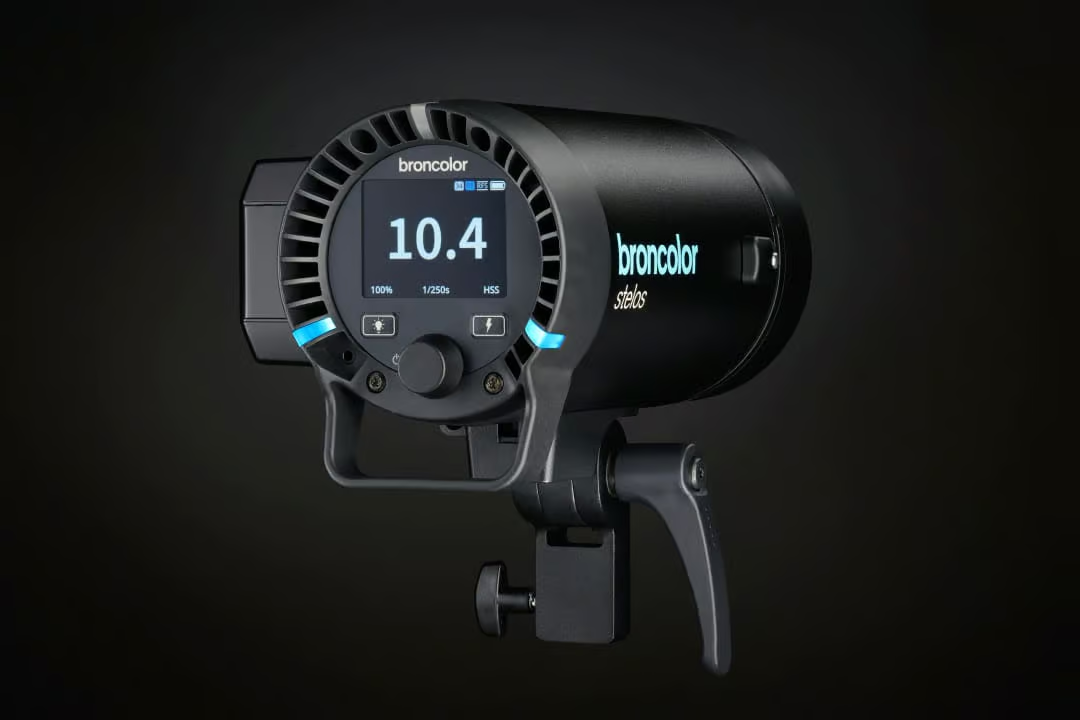
The best of many variants: During the development of the handle at the rear of the portable monolight
Stelos 800 L, various prototypes were 3D-printed.
From weeks to days – and sometimes overnight
Before the introduction of our own 3D printer, the process was very different. Prototypes were produced externally – either by traditional model makers or later by external 3D printing service providers. Both were associated with waiting times. Data had to be sent, feedback had to be awaited, parts had to be delivered.
The in-house printer eliminates these intermediate steps for Bron Elektronik. Development cycles are massively shortened and decisions can be made more quickly. “The development of new parts has become significantly more cost-effective. The decisive factor here is the time saved – because time is ultimately money,” Ferro points out.
More than just prototyping
Today, 3D printing is an integral part of Broncolor’s development and production processes. In addition to prototype production, it is also used for:
- Assembly aids in production
- customized small series
- Technical clarifications in the run-up to series production
At the same time, it enables closer cooperation between different departments. Development, production and service can be involved at an early stage and contribute their expertise – even before a product goes into series production.
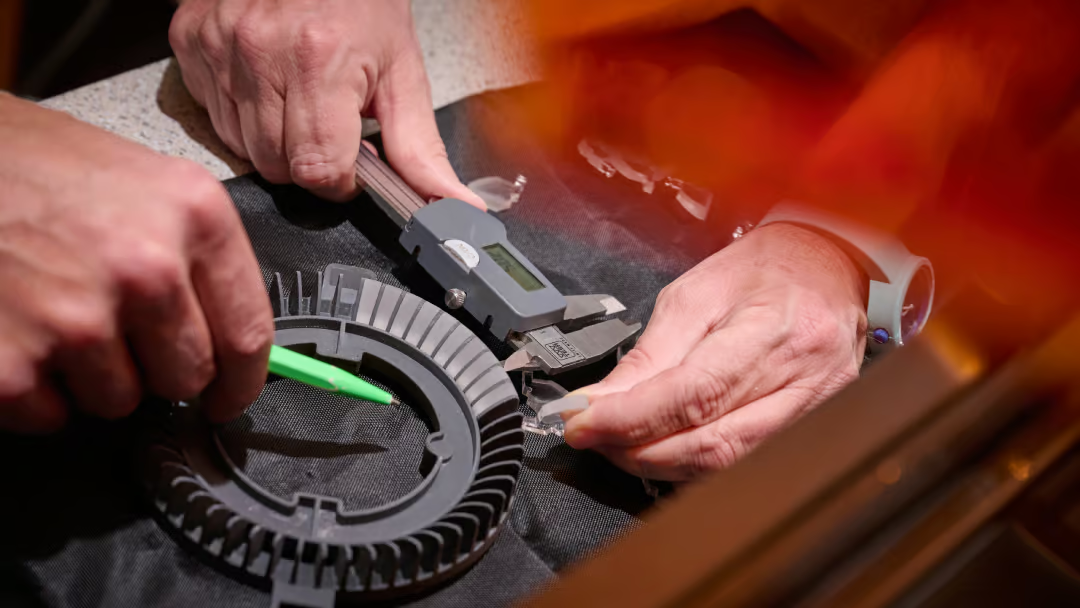
Small parts, big effect: 3D printing allows prototypes for Broncolor products to be produced faster, more flexibly and more efficiently overall. Picture Urs Recher
Quality down to the last detail
For a company like Bron Elektronik, it is not only functionality that plays a role, but also haptics and surface quality. The SLA printer used by Formlabs impresses here with its particularly fine results – a decisive factor in an industry in which visual and haptic quality are key, as Ferro emphasizes. Suitable materials are also used for special requirements, such as in the area of high temperatures, in order to be able to carry out realistic tests.
A tool that has become indispensable
What was originally intended as a supplement is now a central part of everyday working life. “The way we work has become more pleasant and the work itself has become easier,” says Ferro. He is therefore very happy with the Formlabs Form 3+. “It would be impossible to imagine our day-to-day work without it.”
Conclusion: A clear competitive advantage
The introduction of 3D printing at Broncolor impressively demonstrates how modern technologies can change traditional development processes. Faster iterations, better communication and more efficient processes not only lead to time and cost savings, but also to better products. The Broncolor example shows this: For companies that focus on precision, quality and innovation, 3D printing has long been more than just a tool – it is a real competitive advantage.


